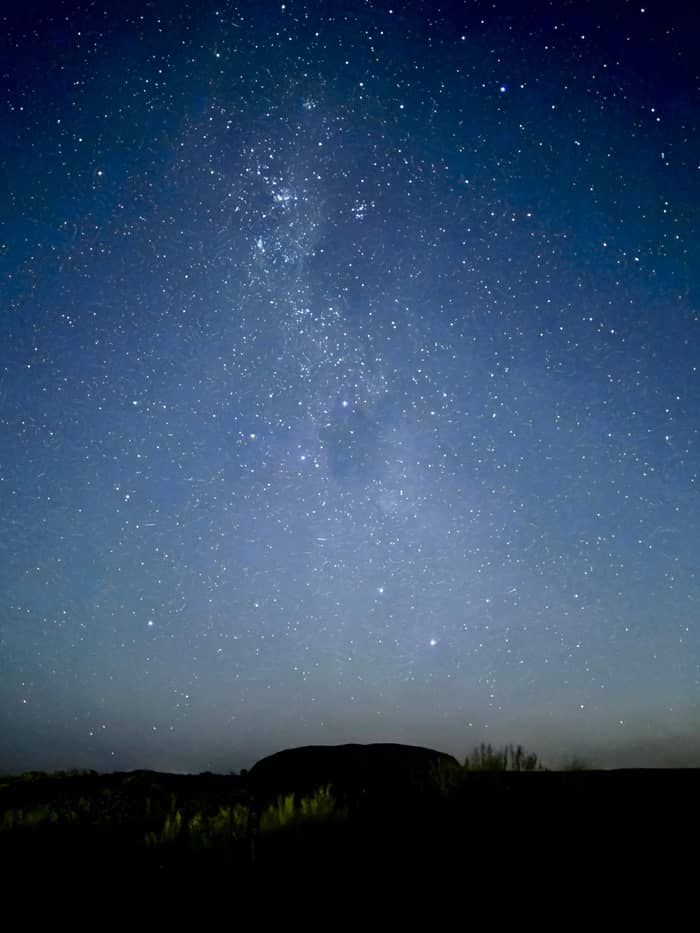
Free unpowered
Curtin Springs
About 100 km from the park
- SitesFree, no bookings
- Showers$5 each
- FiresOwn wood only
Guides
Language
Currency
Check open spotsfrom $557 · no cancel feeSpot your stop
Map of 15 stops
Tap a route first, then a pin or stop, for its note and Google Maps.
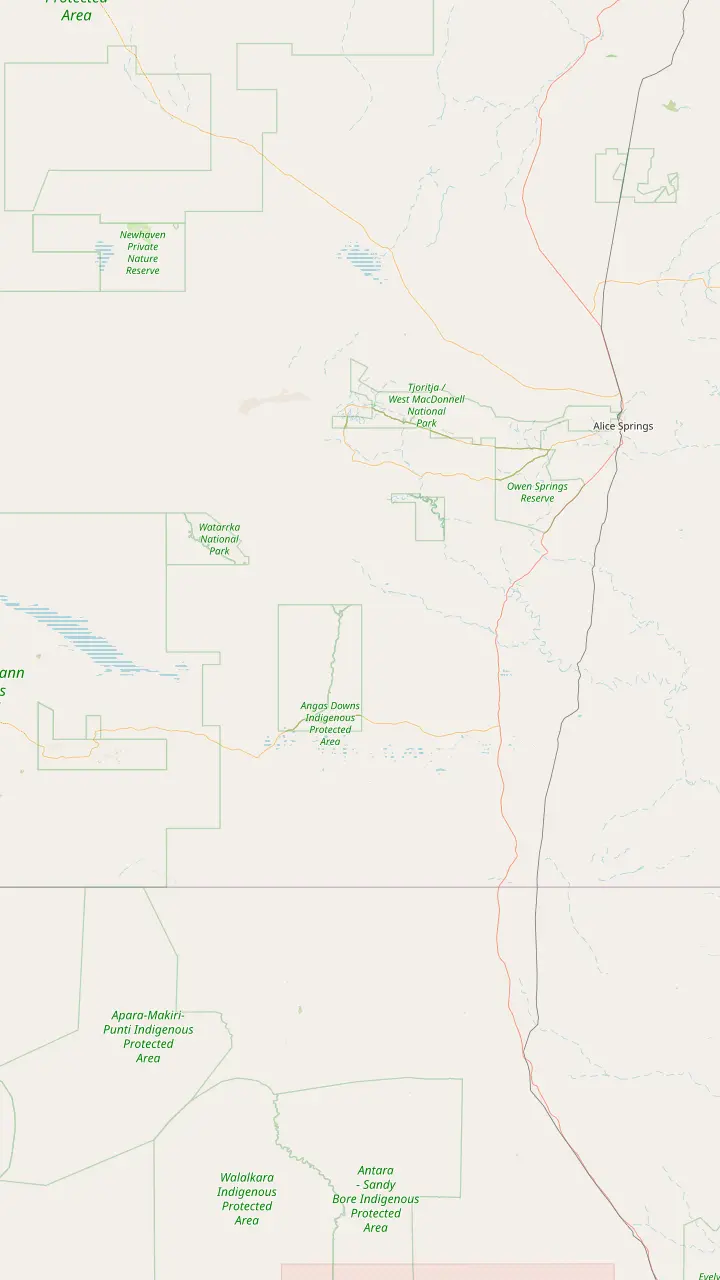
A start and end point of the 3-day camping tour sold here; Kulgera lies 275 km to the south.
Google MapsAt the junction of the Stuart and Lasseter Highways, with camp sites, two-and-a-half hours from Uluru.
Google MapsA roadside view of Atila, the flat-topped monolith that many locals call Fooluru.
Google MapsFree unpowered camping on a first in, best dressed basis; a powered site costs AUD 65 a night.
Google MapsA roadhouse campground 20 km before the South Australian border.
Google MapsThe one campground near the park, 20 km from Uluru, with cabins, powered sites and tent sites.
Google Maps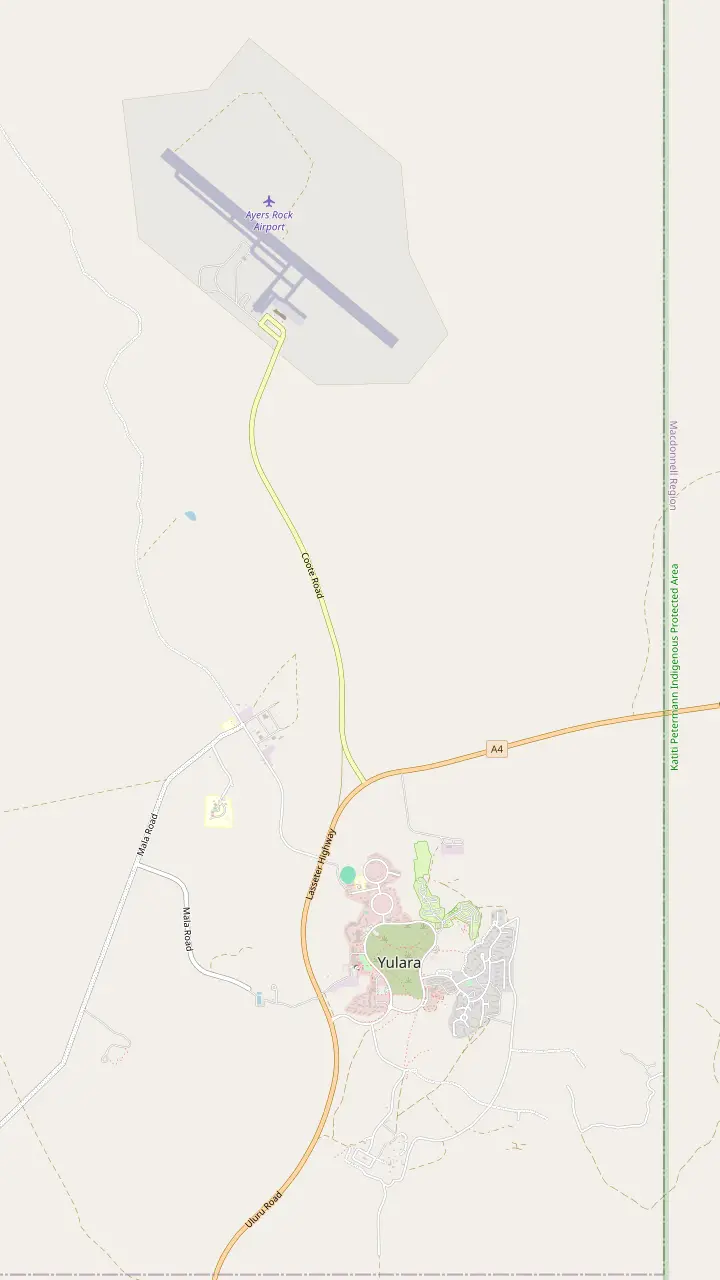
The one campground near the park, 20 km from Uluru, with cabins, powered sites and tent sites.
Google MapsSupermarket and shops, about a 15-minute walk from the campground.
Google MapsYulara's own airport, code AYQ, about 10 minutes by road from the resort.
Google Maps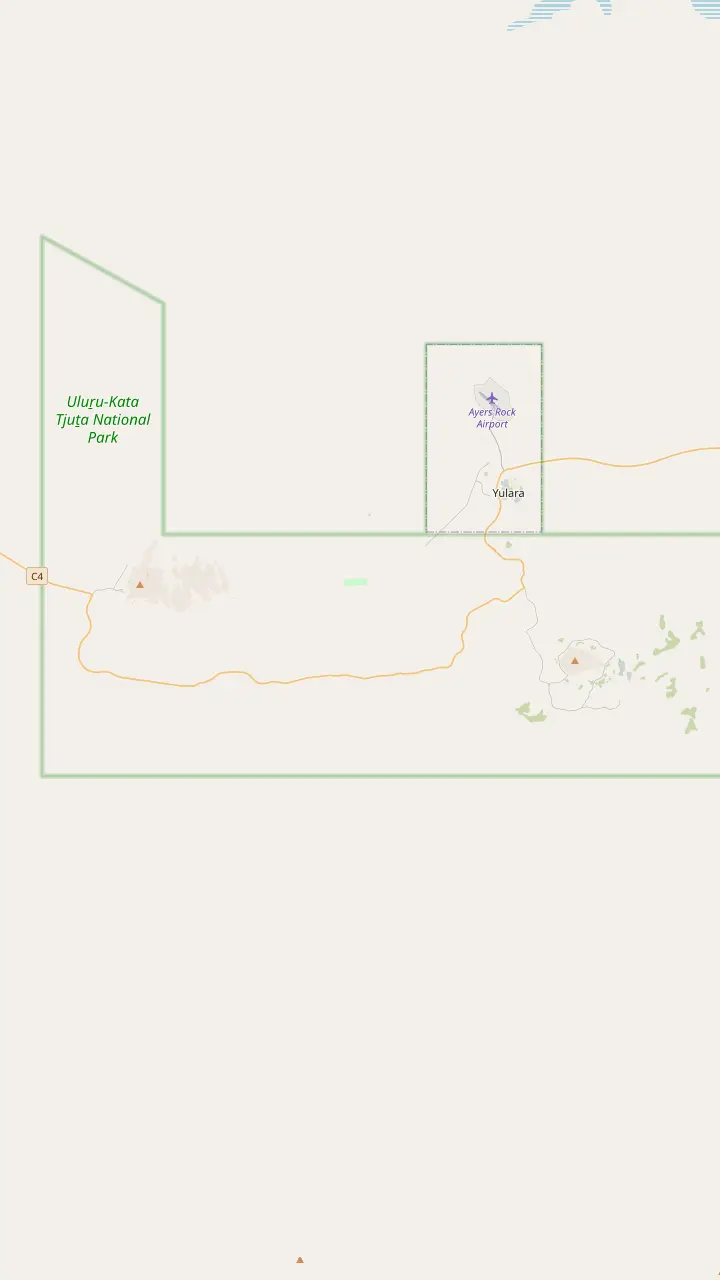
Cars only at sunset, with no water and no toilets on site.
Google MapsOpen 7.00 am to 5.45 pm; its Ininti cafe is the one place in the park that sells food and drinks.
Google MapsRegarded as the only perennial water source in the park; swimming is not allowed.
Google MapsThe main sunrise area, with water and toilets, 35 minutes from Yulara.
Google MapsNo water and no toilets here, so fill bottles before the drive out.
Google MapsWater and toilets, 40 minutes from Yulara.
Google Maps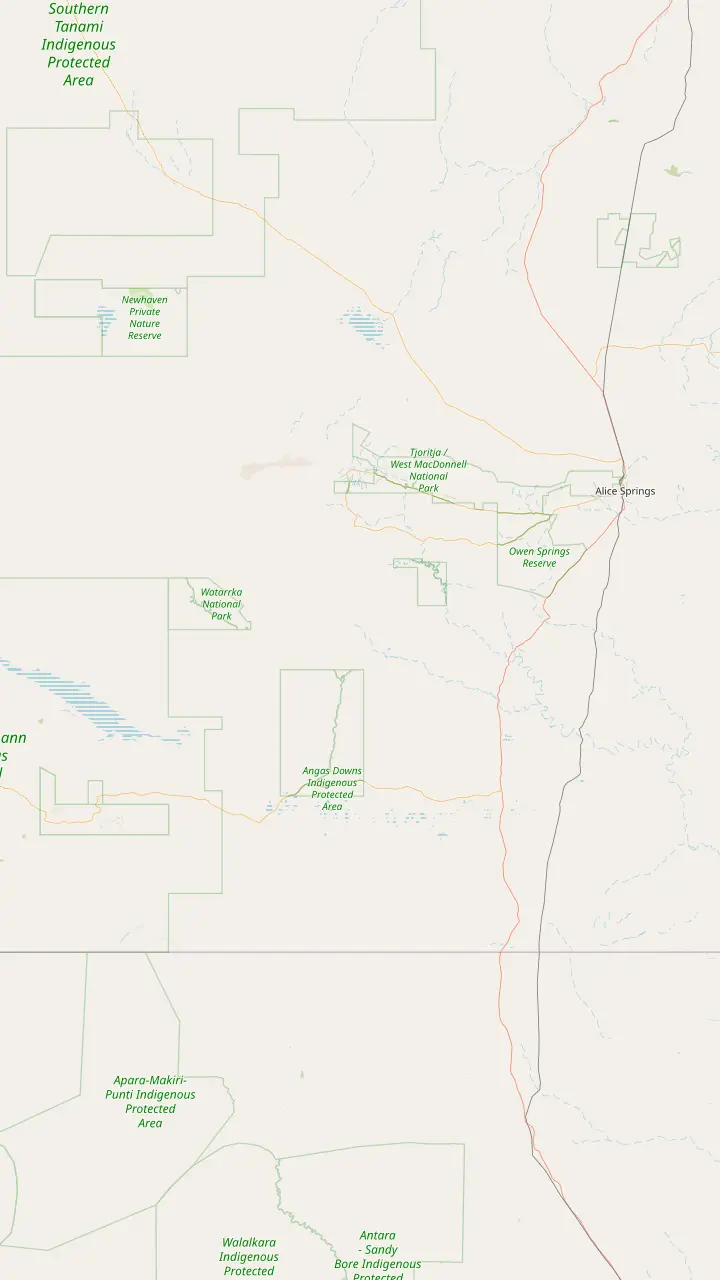
A start and end point of the 3-day camping tour sold here; Kulgera lies 275 km to the south.
Google MapsYulara's own airport, code AYQ, about 10 minutes by road from the resort.
Google MapsAt the junction of the Stuart and Lasseter Highways, with camp sites, two-and-a-half hours from Uluru.
Google MapsIn Watarrka National Park, about 3 hours by road from Uluru.
Google MapsMap © OpenStreetMap contributors
The red dirt beside the highway looks like an open invitation. It is not. Here is where free camping near Uluru is allowed, what it costs to shower and fill a tank, and how to drive the long road safely.
Editorial team, ulurucampingtour.com · Updated November 8, 2026 · Reading: 8 min
Main facts
Free camping near Uluru starts with a firm no. Tourism Central Australia states that free camping is not permitted in or around Uluru-Kata Tjuta National Park, and that there is only one campground in the accommodation precinct near the rock.1,8 It also notes that it is illegal to camp in unstructured sites anywhere in the Northern Territory.9 The empty dunes along the Lasseter Highway are not a loophole.
Curtin Springs, the cattle station east of the park, spells out why roadside camping fails. Camping in the road corridor in the NT is illegal, and land 50 m from the middle of the road is private property, fence or no fence.4 The station adds that a campsite showing on a camping app is not legal because of that.10 The NT emergency service makes the same point: pastoral properties are private property.11
None of this means you have to pay hotel prices. It means choosing a legal place to stop: a structured rest area, a roadhouse campground, or the one free campground that sits within an hour of the park. The sections below go through each, with what you pay, what you get and how far apart they are, so you can plan a budget trip that stays on the right side of the law and still feels like an adventure.
Where you can stop
| Stop | Camping | What it costs | Note |
|---|---|---|---|
| Curtin Springs | Free unpowered3 | Showers $5, water $105,6 | Powered sites $6519 |
| Erldunda Roadhouse | Camp sites12 | Check on arrival | Highway junction |
| Kulgera Roadhouse | Campground26 | Check on arrival | 20 km to the border27 |
| Ayers Rock Campground | Paid sites28 | From $30 AUD29 | 20 km from Uluru |
| Road corridor | Illegal4 | Not a campsite | Private land 50 m out |
Rates as each operator or tourism body lists them; check current prices before you travel.19,29
Curtin Springs is the free option within reach of the park. Parks Australia lists it as a roadhouse, inn and cattle station some 100 km out, offering both beds and pitches.2 The station covers over 1 million acres.17 Its unpowered camping is free and works on a first in, best dressed basis: no charge, no bookings and no allocated sites.3,18 Arrive in the afternoon for the best choice of spot.
A few things are not free. Each hot shower is $5 a head, whatever site you are on, and filling a water tank at the amenities block is $10.5,6 Powered sites must be booked and cost $65 per site per night.19 When you arrive, the station asks you to come into the store first so staff can explain where to set up.20 All sites are red dirt with limited shade, so a shade awning earns its place.21
Fires and pets are allowed with conditions. A fire is fine as long as the wood came with you; the station's own trees are not for burning.22 Pets are welcome if they are secured at your campsite, and generators are allowed when they do not disturb others.23 Black water must be emptied at Ayers Rock Resort or Alice Springs only, so arrive with an empty tank if you plan to stay a few nights.24
The drive is long. By Parks Australia's count the road from Alice Springs to Uluru is 465 km, some 5.5 hours without stops, and Curtin Springs is about 360 km or 3 hours 40 minutes south-west of Alice Springs.16,15 Free camping from Alice Springs to Uluru on one tank and one day is possible, but the better plan splits the road and arrives at the park rested, with enough daylight left to set up camp.
The route turns at Erldunda Roadhouse, at the junction of the Stuart and Lasseter Highways, which has motel units, a caravan parking area and camp sites.31,12 From there Uluru is two-and-a-half hours away.13 Further west you pass Mount Conner, known to Anangu as Atila, a flat-topped sandstone monolith that many locals call Fooluru for its resemblance to Uluru.14 Pull in at the lookout for a photo rather than stopping on the road.
Rest areas line the highways, but they are built for a purpose. Tourism NT describes them as places on main roads for drivers to pull over and rest when tired, and some are reserved for road trains, not cars or caravans, except in an emergency.32,33 Curtin Springs asks travellers to camp only in structured rest areas or campgrounds.34 Read the signs at each stop; they set the rules for that site.
Free, cheap or catered
Find the line that fits your trip and read across.
If I have a self-contained van
Curtin Springs
Free unpowered sites, but black water goes to Yulara or Alice Springs.3,24
If I want to be near the rock
Ayers Rock Campground
If I drive up from the south
Kulgera, then Erldunda
Kulgera is the first pub in the NT; Erldunda has camp sites.30,12
If I spotted a site on an app
Check it is legal
A campsite on an app is not legal for that reason alone.10
If I have no car
Join a camping tour
The tour sold here includes swag nights by the campfire.
Three ways to sleep cheap
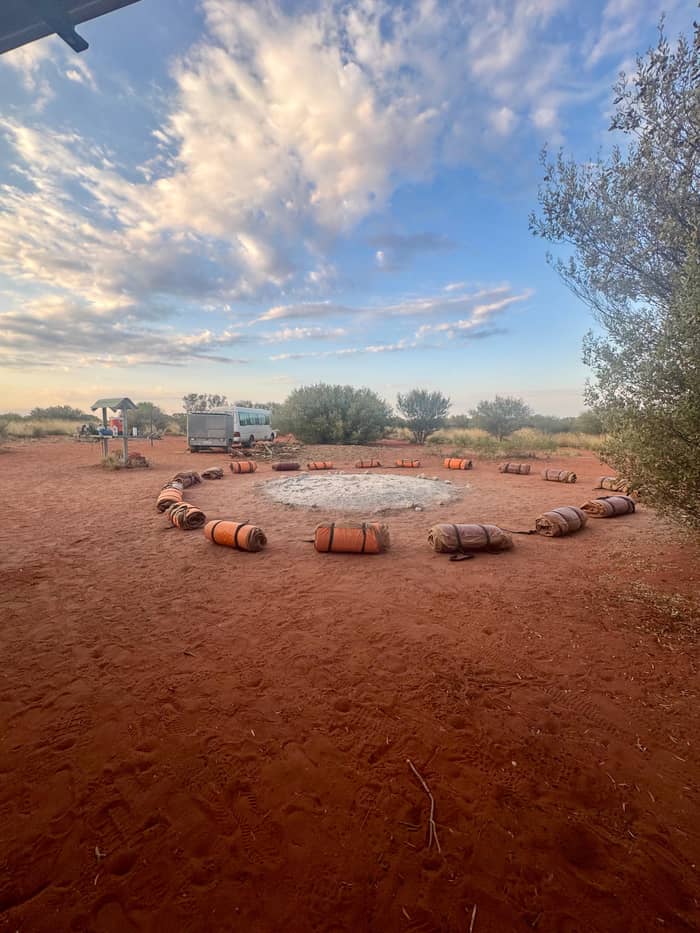
Free unpowered
About 100 km from the park
On the way
Stuart and Lasseter junction
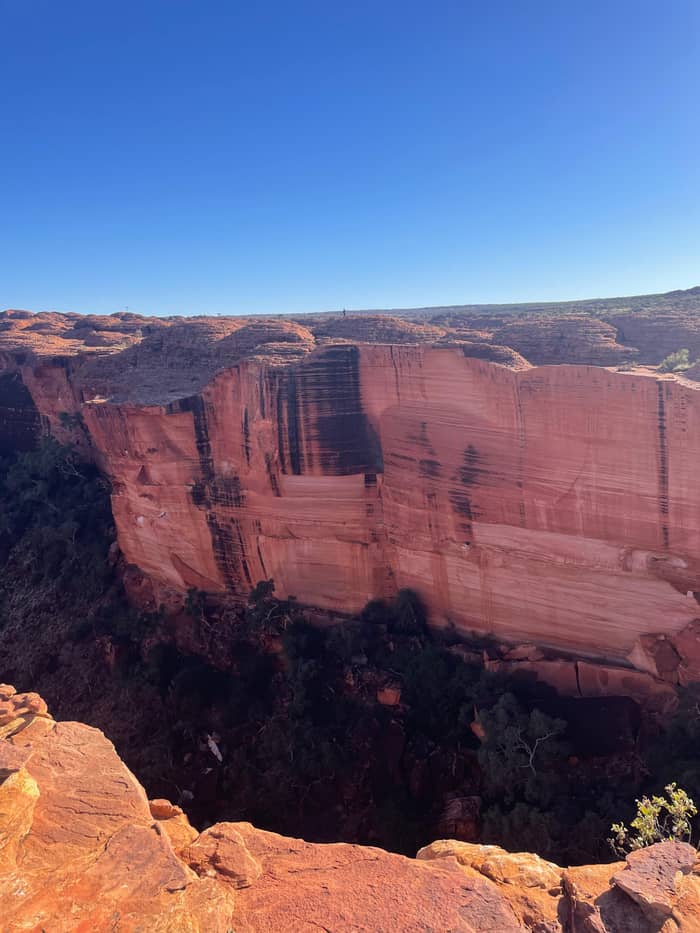
Closest paid
Yulara, 20 km from Uluru
Travellers coming up from the south drive the Stuart Highway, which runs about 2,700 km between Port Augusta and Darwin.54 South Australia's tourism body notes that the sealed highway runs all the way to Darwin, so a normal car can make the trip.55 Camping between Coober Pedy and Uluru means planning stops across South Australia and the Northern Territory and a very long stretch of desert.
Coober Pedy is a stop worth making in its own right. The South Australian Tourism Commission describes beds 25 metres below the surface and campsites dug into the red dirt of the outback.56 North of the border, Kulgera Roadhouse calls itself the first and last pub in the Northern Territory, and contained campfires are permitted at its sites.30,26 The NT/SA border lies a further 20 km beyond the roadhouse.27
Kulgera sits 275 km south of Alice Springs, and from there the road north reaches the Erldunda turnoff for the Lasseter Highway.25,31 Heat is the main planning issue on this leg. South Australia's tourism body warns that some outback places close from mid December to mid February because of the extreme heat, and advises seeking shade between 11am and 3pm in summer.57,58 Drive early, rest at midday.
No car? No problem
Weigh a free camp against a tour: choose one and add your travellers.
3 options compared
Weigh a free camp against a tour: choose one and add your travellers.
≈
View≈
View≈
ViewAll amounts are from-prices on GetYourGuide, converted at the ECB reference rate. Exact prices are shown at booking.
The drive in
Start
Fill the tank and the water containers.7
Turnoff
Roadhouse with camp sites; Uluru is two-and-a-half hours on.12,13
Lookout
View of Atila, the monolith locals call Fooluru.14
About 360 km
About 465 km
End of the road: 465 km from where you set out.16
Carry far more water than seems sensible. The NT emergency service says it is essential to carry plenty of water when driving, at least 20L, while Tourism NT sets a minimum of 4-6 litres per person a day.7,59 Remote service stations have restricted opening hours and limited bank facilities, so fill the tank whenever you can and keep some cash.48 Never pass a fuel stop on a low tank in the hope of the next one.
Fatigue is the quiet danger on these roads. Tourism NT recommends a 15 minute rest break every two hours of driving.49 An NT road train may haul three trailers and stretch past 50m, at 2.5m wide, so overtake only with a long clear view.60 The NT emergency service asks drivers to take particular care at dawn and dusk, when wildlife is most active.61 Kangaroos and cattle on the road at dusk are a real risk.
If something goes wrong, stay with the vehicle; a car is easier to find than a person.53 Before you leave a main road, tell someone you trust your plans, route and expected arrival.51 Check road conditions every day at roadreport.nt.gov.au or by phone, since they can change quickly after rain.52 These habits matter more on a free camping trip, where help is further away and phone signal comes and goes.
Video
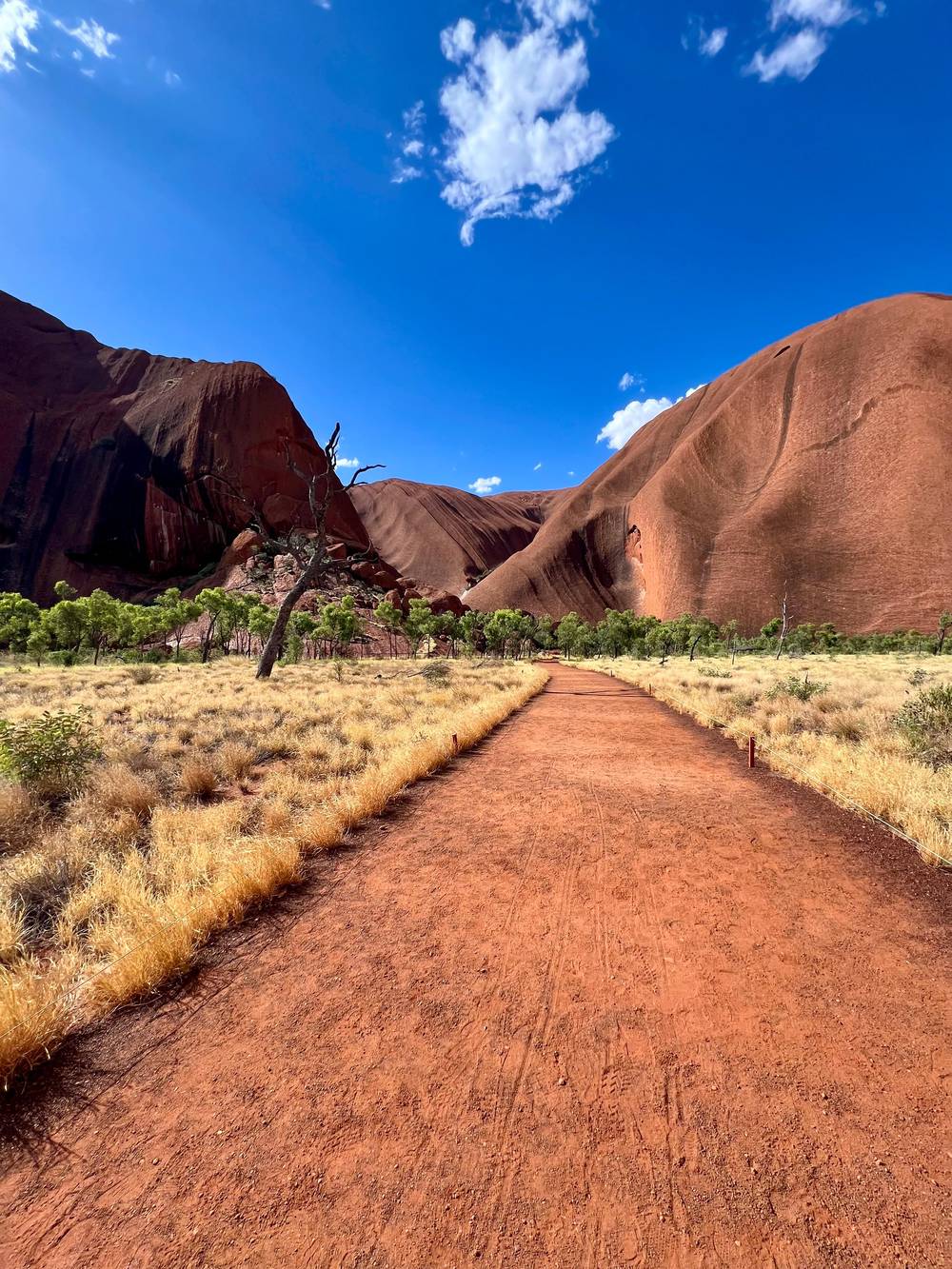
Sharyn's Shenanigans on YouTube · The video waits until you tap play to load.
Camping in the road corridor in the NT is illegal and 50m from the middle of the road is then private property.
Before the long drive
Fire is the biggest responsibility. Territory emergency services want fires kept to proper fireplaces, with a gas cooker in the car for days under a total fire ban.50 Bring your own firewood rather than cutting trees, as Curtin Springs asks.22 Douse the fire with water and stir the ashes until they are cold before you sleep; desert wind can lift a spark a long way, even on a calm evening.
Leave no trace. Everything you bring in goes out again, as Parks Australia asks of every visitor, and Curtin Springs asks that black water go only to the dump points at Ayers Rock Resort or Alice Springs.62,24 Keep generators for the daytime and away from your neighbours, keep pets secured, and treat the shower block and taps as shared property in a place where water is precious.23 Short showers keep everyone happy.
Stay on the highways unless you have permission. A Central Land Council permit is needed to visit or pass through Aboriginal land outside the national park, including roads such as the Tjukaruru Road.63 Pastoral leases beside the road are private property too.11 The legal stops are enough for a great trip: a station campground, a roadhouse fire and a sky full of stars over the dunes.
Compare the real costs before you decide. A free site at Curtin Springs still means paying for showers and water, fuel for a long drive each day to the park, and the park pass.5,64 The nearest paid option, Ayers Rock Campground, starts at $30 AUD a night for an unpowered tent site in low season and puts you 20 km from Uluru.29,28 Add up both before you pick the free option for its price alone.
Curtin Springs is about an hour from Yulara by road, so a sunrise at the rock means an early drive in the dark, when wildlife is most active.65,61 For a short stay, the saving on a free site can disappear into fuel and lost sleep. For a longer road trip with a self-contained van, it is a genuinely good base with big skies and a friendly bar, and the station's quiet nights are hard to beat.
If you do not have a vehicle, a camping tour does the same job for one price. With the 3-day tour sold here, your nights are spent in a swag by the fire while the operator sorts out driving, meals and camp. Use the price tool at the top of this page to compare it with a few nights of self-driving, and the map to see how far apart the stops really are out on the ground, hour by hour.
FAQ
Free camping is not permitted in or around Uluru-Kata Tjuta National Park.1
Camping in the NT road corridor is illegal, and land 50 m from the road centre is private property.4
The NT emergency service says at least 20L in the vehicle.7
Bring your own firewood and do not cut the station's trees.22
Curtin Springs asks campers to use Ayers Rock Resort or Alice Springs only.24
Sources
Cold nights or long walks worrying you? Ask a real person here.