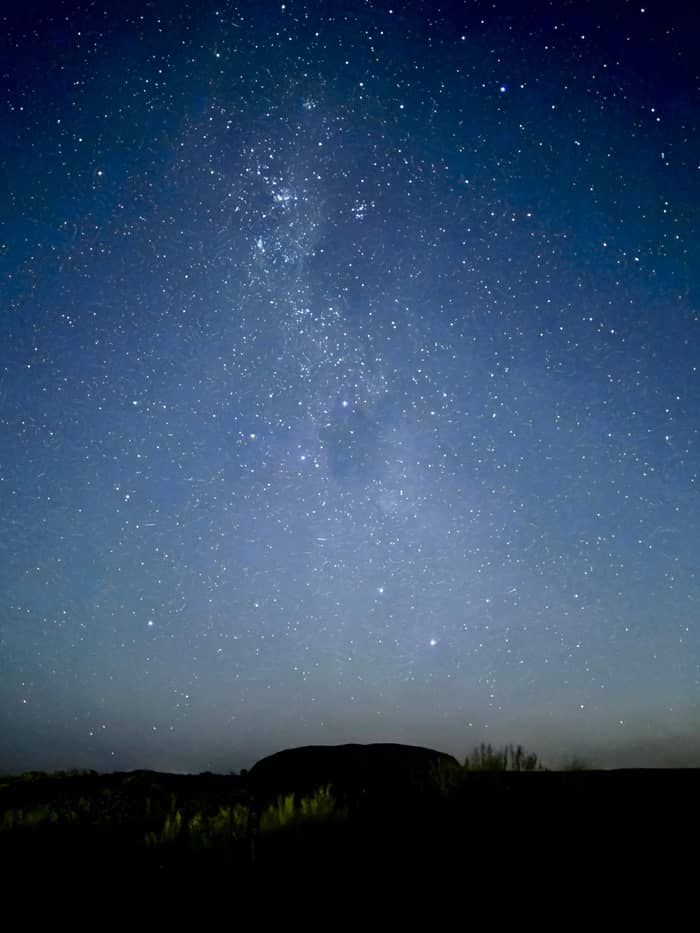
Most common
Pila
Spinifex plains
- Look forDesert oak
- AnimalWoma python
- Best seenOn the drive in
Guides
Language
Currency
Check open spotsfrom $557 · no cancel feeSpot your stop
Map of 15 stops
Tap a route first, then a pin or stop, for its note and Google Maps.
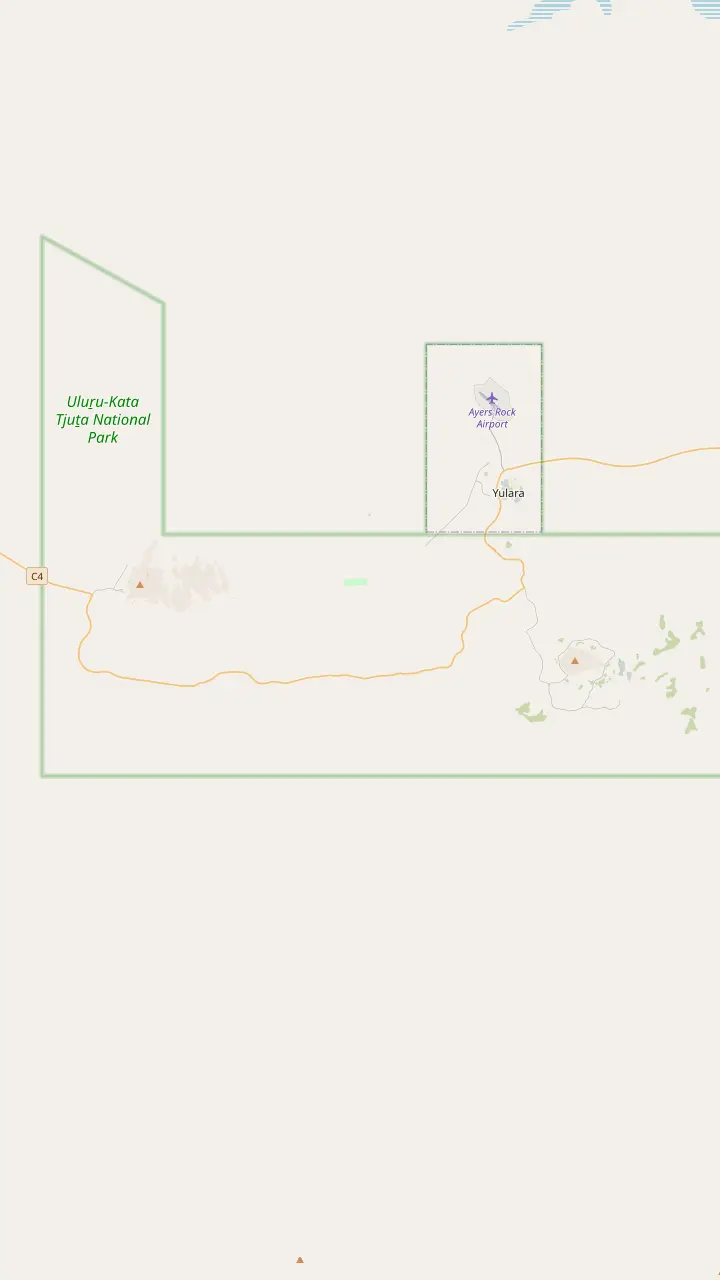
Cars only at sunset, with no water and no toilets on site.
Google MapsOpen 7.00 am to 5.45 pm; its Ininti cafe is the one place in the park that sells food and drinks.
Google MapsRegarded as the only perennial water source in the park; swimming is not allowed.
Google MapsThe main sunrise area, with water and toilets, 35 minutes from Yulara.
Google MapsNo water and no toilets here, so fill bottles before the drive out.
Google MapsWater and toilets, 40 minutes from Yulara.
Google Maps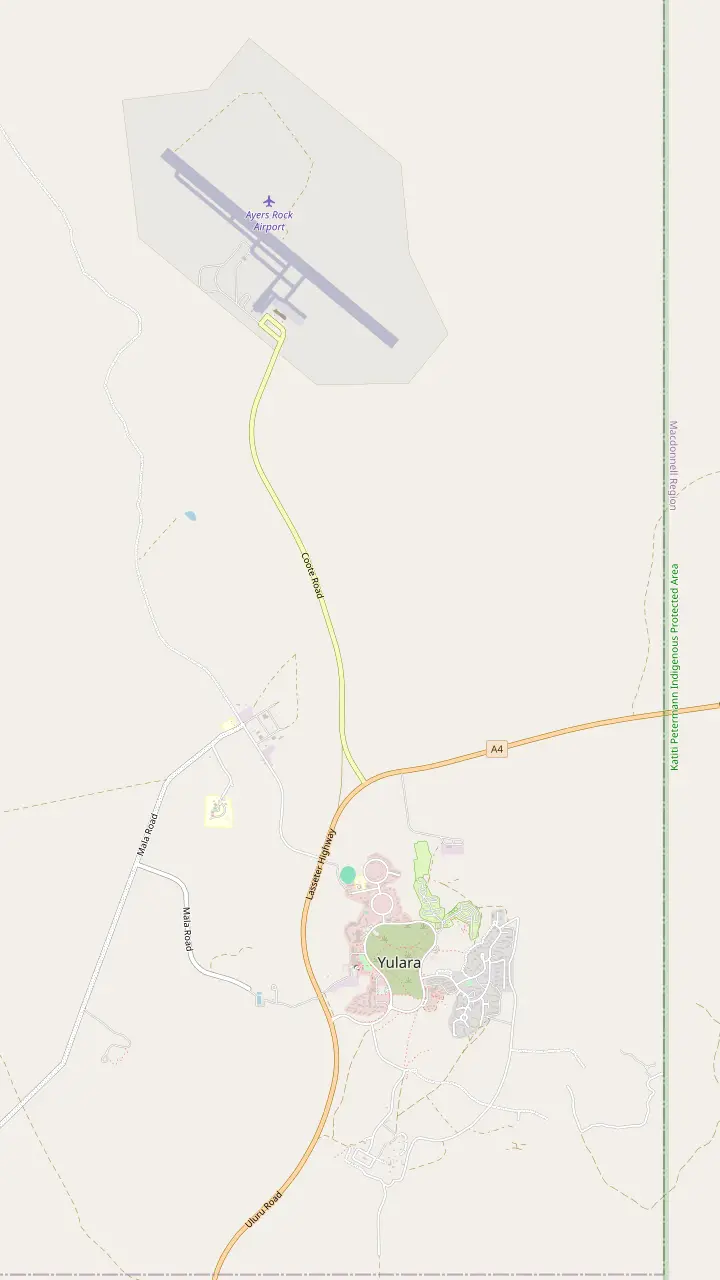
The one campground near the park, 20 km from Uluru, with cabins, powered sites and tent sites.
Google MapsSupermarket and shops, about a 15-minute walk from the campground.
Google MapsYulara's own airport, code AYQ, about 10 minutes by road from the resort.
Google Maps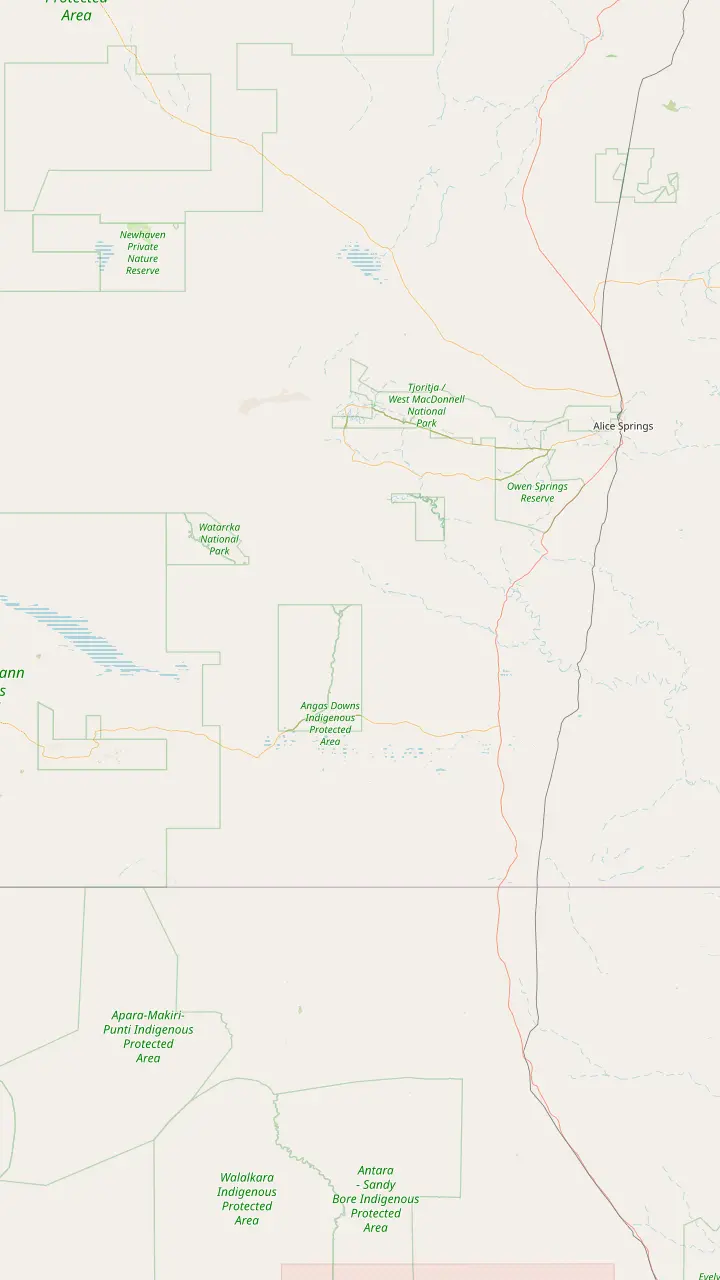
A start and end point of the 3-day camping tour sold here; Kulgera lies 275 km to the south.
Google MapsAt the junction of the Stuart and Lasseter Highways, with camp sites, two-and-a-half hours from Uluru.
Google MapsA roadside view of Atila, the flat-topped monolith that many locals call Fooluru.
Google MapsFree unpowered camping on a first in, best dressed basis; a powered site costs AUD 65 a night.
Google MapsA roadhouse campground 20 km before the South Australian border.
Google MapsThe one campground near the park, 20 km from Uluru, with cabins, powered sites and tent sites.
Google Maps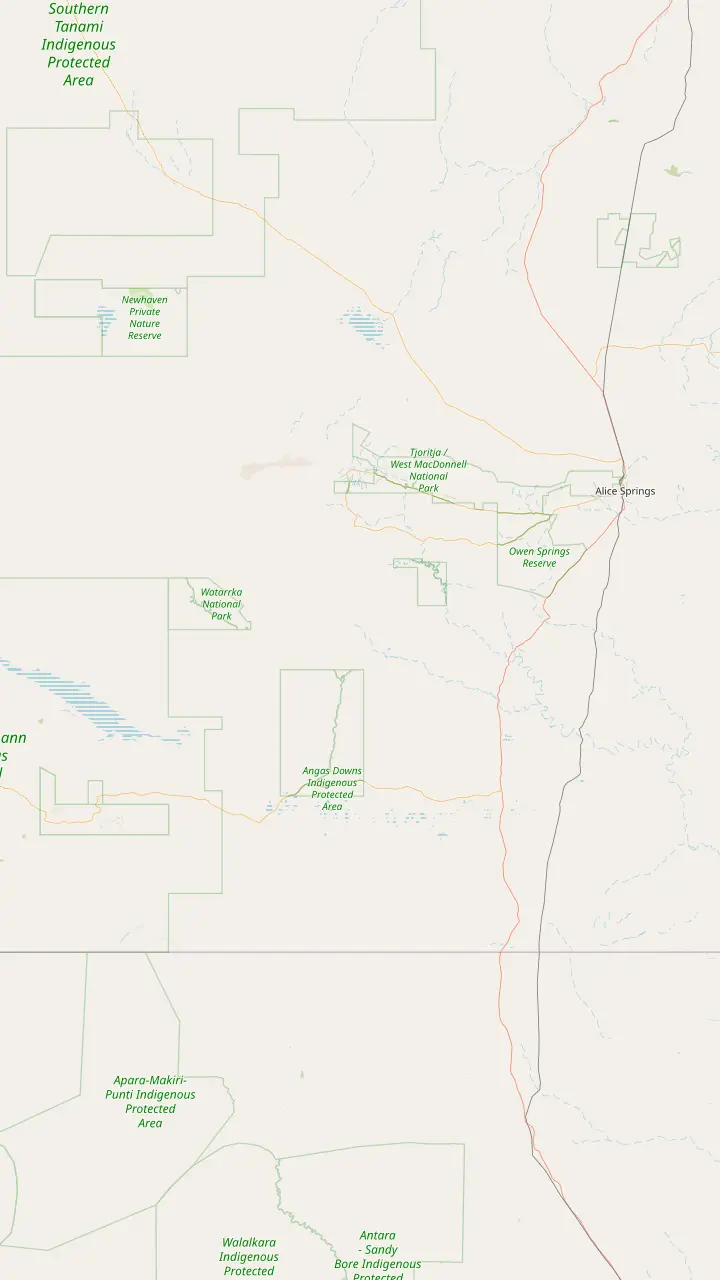
A start and end point of the 3-day camping tour sold here; Kulgera lies 275 km to the south.
Google MapsYulara's own airport, code AYQ, about 10 minutes by road from the resort.
Google MapsAt the junction of the Stuart and Lasseter Highways, with camp sites, two-and-a-half hours from Uluru.
Google MapsIn Watarrka National Park, about 3 hours by road from Uluru.
Google MapsMap © OpenStreetMap contributors
Uluru national park is officially Uluru-Kata Tjuta National Park, owned by Anangu and run jointly with Parks Australia. Here is how it works, what lives in it, and the rules every camper should know.
Editorial team, ulurucampingtour.com · Updated November 8, 2026 · Reading: 8 min
Main facts
Uluru national park is the name most visitors search for, but the official title is Uluru-Kata Tjuta National Park, adopted in 1993.1 The story starts earlier: Ayers Rock, now called Uluru, was first declared a national park in 1950.6 At a handback ceremony on 26 October 1985, Australia's Governor-General gave the deeds of the park back to Anangu, and Anangu leased the land to the national parks service for 99 years.7,8
Ownership sits with Anangu, who lease the park to the Commonwealth, and day-to-day running is a partnership between them and Parks Australia.2,9 A board of management makes the major decisions. It has 12 people, and eight of them are Aboriginal members nominated by Traditional Owners.10 Digs across Central Australia put Aboriginal presence here at more than 30,000 years.11 That is the timescale behind every rule in the park.
The world has recognised the place twice. UNESCO first inscribed it in 1987 for geology, wildlife and scenery, then returned in 1994 to honour it as a cultural landscape.12,13 Parks Australia notes it is one of only a few dozen places worldwide with a dual listing, and one of only four in Australia.14 For a camper, that history explains the rules: people still live by the law of this country, and the rock is far more than a view.
Plan around the gates
| Month | Opens | Closes |
|---|---|---|
| January and February | 5.0 am3 | 9.00 pm |
| March | 5.30 am3 | 8.30 pm |
| April | 5.30 am3 | 8.00 pm |
| May | 6.00 am3 | 7.30 pm |
| June and July | 6.30 am3 | 7.30 pm |
| August | 6.00 am3 | 7.30 pm |
| September | 5.30 am3 | 7.30 pm |
| October | 5.0 am3 | 8.00 pm |
| November | 5.0 am3 | 8.30 pm |
| December | 5.0 am3 | 9.00 pm |
Opening hours as Parks Australia lists them; every visitor must leave the park by closing time.3,17
No day of the year is a closed day, yet nobody may stay inside overnight.16,17 Hours follow the sun. In the summer months the barrier lifts at 5.00 am and drops at 9.00 pm; in June and July it lifts at 6.30 am and drops at 7.30 pm.3 The table below lists every month, so you can plan a sunrise or a late sunset around them without a rushed drive out before the barrier comes down at dusk.
The shoulder months sit in between. In April the park opens at 5.30 am and closes at 8.00 pm, while in October it opens at 5.00 am and closes at 8.00 pm.3 Those early openings make a camping tour's dawn starts possible: a group camped outside the park can be at a viewing area as the light comes up, then walk before the heat builds. Ask your guide which gate time the group is aiming for each morning.
The Cultural Centre keeps shorter hours, 7.00 am until 5.45 pm daily.18 Budget two hours or more for it, as the rangers suggest, and note that its Ininti cafe is the park's lone source of food and drink.19,20 Out the back you will find picnic tables, gas barbecues and shelter from the sun, a good lunch stop between morning and afternoon walks.21 Fill your bottles there too before heading back out.
Who lives here
Species counts as Parks Australia publishes them for Uluru-Kata Tjuta National Park.4
The desert here is far from empty. On Parks Australia's tally the park holds 178 bird species, 73 reptiles, 21 mammals and 4 frogs adapted to the desert.4 The largest residents are impressive: the red kangaroo is Australia's largest land mammal, with males growing to 2.4 metres tall and up to 85 kg.26 The perentie, Australia's largest goanna, grows to over 2.5 metres and can weigh up to 20 kg.27
Smaller animals are just as remarkable. The thorny devil eats only ants and can get through thousands in a single day.28 The park's water-holding frogs bury themselves deep in the sand and come up to breed after heavy rain, and after big rains shield shrimps hatch in temporary waterholes and rock pools.29,30 Southern marsupial moles, weighing between 40 and 70 grams, sometimes surface after rain.31
Birdwatchers have the best of it. With 178 species recorded, the park rewards anyone up early, and Parks Australia says early morning is the best time to see birds.4,22 A camping tour's dawn starts suit this perfectly. Bring binoculars, walk quietly, and listen: you will usually hear a bird before you see it. Never touch or handle wildlife; Parks Australia asks every visitor to leave animals alone.32
Make the most of the park
Pick what you care about most and read across.
If I love birds
Go out at first light
Early morning is the best time to see the park's birds.22
If I want the reptiles
Visit August to October
Reptiles leave brumation and grevilleas bloom in piriyakutu.23
If I want photos of everything
Learn the sensitive sites first
Photographing sensitive sites is prohibited.24
If I am bringing a drone
Leave it at home
The park is a no-drone park.25
If I hate early starts
Use the late summer closing
In December the park closes at 9.00 pm.3
Three habitats to notice
Most common
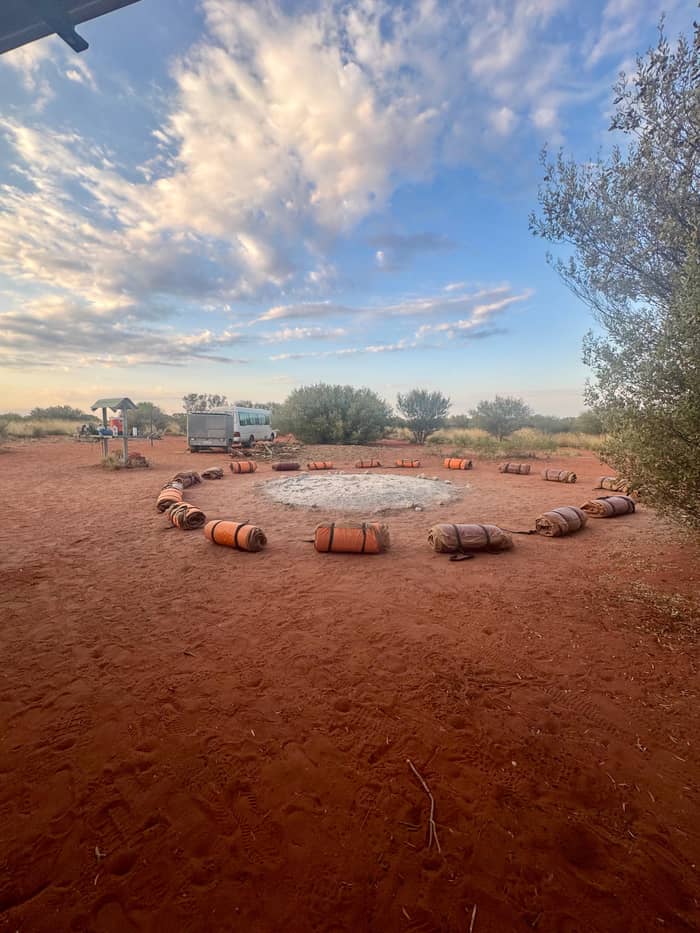
Spinifex plains
Fragile
Sand dunes
Shelter
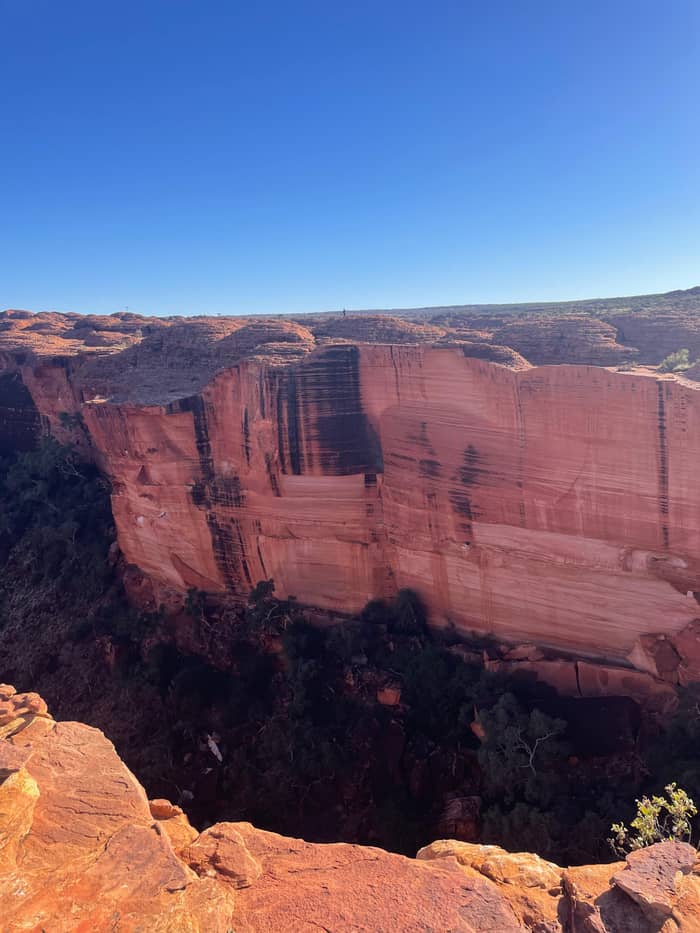
Rocky areas
Are there crocodiles in Uluru? The park's own safety advice does not mention them. Parks Australia says its animals rarely pose any threat to people, and the couple it asks visitors to take care around are the king brown snake and the dingo.5 Surface water is scarce: the Mutitjulu waterhole at the base of Uluru is regarded as the only perennial water source in the park.40 Look for lizards on the warm rocks instead.
The king brown snake, or liru, is venomous and reaches up to three metres, but it keeps away from humans and normally strikes only when provoked.60,58 If you see one, keep your distance and let it move away. Dingoes are wild animals with sharp teeth, more active at night than by day, and visitors should never touch or feed them.61,57 At camp, keep food sealed and rubbish packed away, and admire any dingo from where you stand.
Heat deserves as much respect as any animal. Afternoons of 30 °C are routine and summer can push past 40 °C, so the rangers ask for one litre of water per walker for each hour on the track.62,55 Most walks have an emergency radio on the way, and in an emergency you call 000, or 112 from a mobile.63,64 Signal is patchy, so walk with others and tell someone your route before you set out on a long walk.
See the park with a guide
See the park with a guide: choose a trip and set how many are going.
3 options compared
See the park with a guide: choose a trip and set how many are going.
≈
View≈
View≈
ViewAll amounts are from-prices on GetYourGuide, converted at the ECB reference rate. Exact prices are shown at booking.
How the park came to be
More than 400 plant species grow in the park, and unlike the greener parts of Australia, its most common trees are acacias rather than eucalypts.65,66 Parks Australia divides the landscape into six habitat types, and pila, the spinifex plains between dunes, is the most common.67,68 There are four spinifex species in the park, and many adult desert oaks are likely to be more than 1000 years old.69,70
Fire shapes all of it. In 1950 a fire fed by 20 years of growth burnt about a third of the park's vegetation, and in 1976 two more fires burnt out more than 75% of the park.71,72 Managers then worked with Traditional Owners on a system of patch burning, and today that burning takes place in winter, when temperatures are low and the winds are light.73 The patchwork of burnt and unburnt ground you see from the road is deliberate.
Rangers also fight newcomers. The main feral animals in the park are camels, rabbits, foxes and cats, and with no fences around the park, control is shared with neighbours across the region.74,75 Buffel grass is by far the most invasive weed.76 The mala, now extinct in the wild, has been bred in the park since 2005 inside a 170-hectare feral-proof enclosure.77,15,78 One of the main Tjukurpa stories is about the Mala people, which gives the program a cultural weight as well.
Video
Bird Walkz on YouTube · The video waits until you tap play to load.
one of only a few dozen places in the world to have received a dual World Heritage listing (and one of only four in Australia)
Respect the park
Every visitor needs a park pass to enter Uluru-Kata Tjuta National Park.54 So do you need a permit to visit Uluru beyond that? For an ordinary visit, no. Parks Australia says a permit is needed only for certain activities in the park, or to visit Aboriginal land outside it.79 Parks Australia prices a 3-day pass for an adult at AUD 38, while anyone under 18 enters free.80,81 The price page of this site explains what that money pays for.
The permit list is specific. It covers research, filming or photography for commercial and public purposes, including influencers and bloggers, hosting an event, running commercial tours and operating a drone.82 Uluru-Kata Tjuta is a no-drone park, and a drone permit is approved only in exceptional circumstances; flying one without a permit is an offence under the EPBC Act.25,83 Penalties apply.
The road in matters too. Every road inside the boundary is bitumen and suits a regular 2WD, but a 4WD is recommended if you drive in from Western Australia.84,85 The Great Central Road from Laverton crosses Aboriginal land, and a Central Land Council permit is needed for roads such as the Tjukaruru Road outside the park.86,87 The sealed highways from Alice Springs are not on that permit list.
Some rules protect culture. Photographing culturally sensitive sites is prohibited, and they are marked by signs in the park.24 Keep to marked tracks and do not walk through or over vegetation.56 Swimming in the park's waterholes is not permitted.41 Most of the park is a declared alcohol-free area, with two designated exceptions at the Uluru car and bus sunset areas.88,89 Take every cap and can home.
Others protect wildlife and the land. Dogs are not permitted in any Commonwealth national park, Uluru-Kata Tjuta included, although assistance dogs may come in on a short lead of three metres or less.59,90 Take all rubbish with you, and never touch or handle wildlife.91,32 None of these rules is hard to follow, and on a guided camping tour someone who knows the park is always close by to ask.
Anangu recognise five seasons in the park, and each changes what you see.92 Wanitjunkupai, around April and May, brings the first chill and sends reptiles into their winter rest.93 In piriyakutu, usually August to October, reptiles return and grevilleas begin to bloom.23 From late October to December comes kuli, the fiercest heat, with lightning storms that deliver very little water.94 Each season rewards a different kind of visit.
FAQ
Parks Australia's safety advice names the king brown snake and the dingo as the animals to take care around.5
Opening ranges from 5.00 am at midsummer to 6.30 am at midwinter, and closing from 9.00 pm down to 7.30 pm.3
The Traditional Owners hold title and rent the park to the federal government.2
Uluru-Kata Tjuta is a no-drone park; a permit is approved only in exceptional circumstances.25
21 mammals, 73 reptiles, 178 birds and 4 desert-dwelling frogs.4
Swimming in waterholes in the park is not permitted.41
Sources
Cold nights or long walks worrying you? Ask a real person here.